


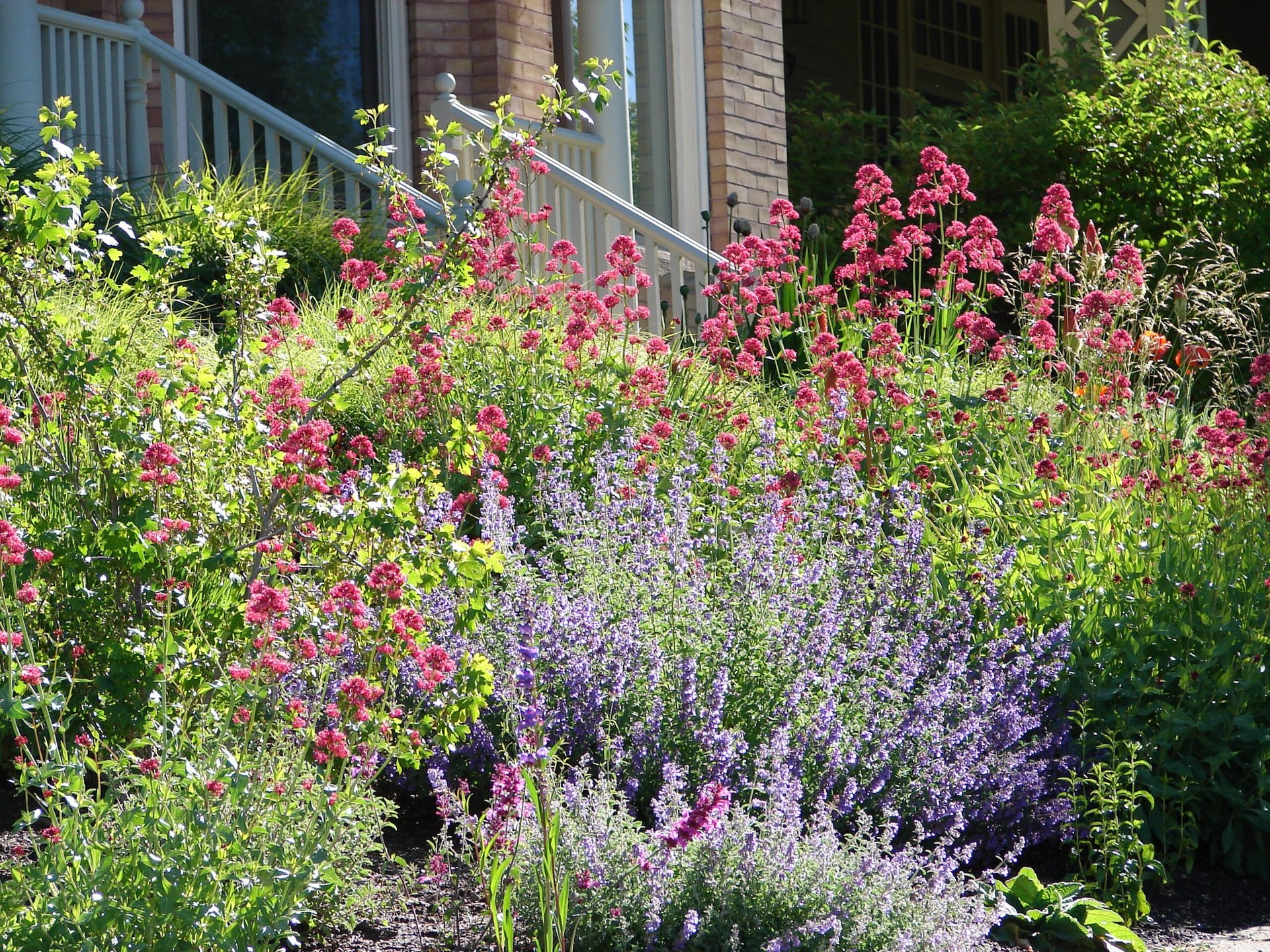

Editor’s Note: This story originally appeared on LawnStarter.
Looking for the best plants for xeriscaping your garden? You’re in the right place.
We put together a list of beautiful ground covers, shrubs, wildflowers, cacti, and trees you can choose from.
Xeriscaping — landscaping that reduces or eliminates the need for irrigation — has become very popular in western America in the last few years, bringing a breath of fresh air to its arid gardens.
With up to 60% less water usage than traditional lawns, it’s no wonder the interest has skyrocketed.
Other regions are using it, too. And why not? Keeping a nice garden with lower costs is a good idea anywhere.
1. Sonoma sage (Salvia sonomensis)

Also called creeping sage, Salvia sonomensis is an aromatic perennial herb native to the Mediterranean climate. In the U.S., sage grows naturally in Sonoma County, Napa County, and the coastal area of California from Santa Barbara to San Diego.
It has attractive wrinkled silver-green leaves and purple, red, pink, or white blossoms that spread a delicate scent when exposed to the sun’s heat.
- Mature Size: Short, 1-2 feet tall and 5-15 feet wide, suitable as flowering ground cover.
- Light: Grows in full sun and partial shade.
- Soil: Requires well-drained soil.
- Water: Drought-tolerant, can resist long periods without moisture.
- USDA Plant Hardiness Zones: Thrives in the coastal and foothill areas of climate zones 8 to 10.
2. Tongue agave (Agave ovatifolia)

Agave ovatifolia is a succulent, claiming its place as an accent plant in any garden. It has thick blue-gray leaves with small teeth along the margins, forming an impressive round rosette.
This evergreen perennial is native to northeastern Mexico and flowers only once. It produces magnificent clusters of greenish-yellow flowers on spikes up to 15 feet tall.
Use it to add beautiful texture and structure to Mediterranean-style xeriscaping, cactus and succulent gardens, and rock and gravel gardens.
- Mature Size: 3-4 feet tall and 4-6 feet wide
- Light: You can plant it in full sun or light shade.
- Soil: It thrives in well-drained soil (chalk, sandy, loam, rocky).
- Water: Low water needs
- USDA Plant Hardiness Zones: Best planted in zones 7 to 11.
3. Shore juniper (Juniperus conferta)

Put shore juniper on the list of dense, low-spreading shrubs you can use as garden ground cover. It will fill your outdoor space with a beautiful carpet of blue-green needles that turn a magical bronze-green in the winter.
Shore juniper is native to Sakhalin Island in Russia. The shrub has a pleasant, fresh, alpine fragrance. It also produces dark-blue or green seed cone fruits that attract birds into your garden.
- Mature Size: 6-12 inches tall and 6-8 feet wide.
- Light: Thrives in full sun but will tolerate partial shade.
- Soil: Prefers well-drained sandy soil and is adaptable to poor soil.
- Water: Medium water requirements, drought-tolerant at maturity
- USDA Plant Hardiness Zones: Thrives in zones 6 to 9.
4. California sagebrush (Artemisia californica)

California sagebrush is a perennial shrub with beautiful filigree-like light-green to gray leaves. It branches from the base to a rounded shape with weedy foliage bearing smooth and fuzzy stems.
Tough and easy to grow, California sagebrush is a top choice for south-facing slopes and dry soils.
- Mature Size: Can reach 1-8 feet in height.
- Light: Enjoys full sun locations.
- Soil: Thrives in shallow, well-drained soil.
- Water: Drought-tolerant
- USDA Plant Hardiness Zones: Grows better in zones 7 to 10, coastal areas, and dry foothills.
5. Beavertail cactus (Opuntia basilaris)

Native to Mexico, Arizona, and the southern regions of Utah, Nevada, and California, the Beavertail cactus grows flat, oval to round, blue, blueish-green, or purple pads.
It blooms from early spring to summer in dark-pink flowers and fits perfectly in gravel and rock gardens.
- Mature Size: Can grow 20 inches high and spread up to 6 feet wide.
- Light: Plant in full sun locations.
- Soil: Prefers well-drained soil, loam, or sand.
- Water: Drought-tolerant.
- USDA Plant Hardiness Zones: Hardy to zone 4.
6. Purple coneflower (Echinacea purpurea)

The cheerful purple coneflower is a resilient perennial with deep roots and strong stems. Used as an ornamental plant, echinacea fills the yard with striking summer flowers, mixing pink petals and orange cones.
Indigenous to the eastern United States, it also thrives in the South, all the way to Florida, Louisiana, and Oklahoma. It’s a popular medicinal plant. It is used in cosmetics and attracts bees and hummingbirds.
- Mature Size: Plants grow 2-4 feet tall and up to 2 feet wide.
- Light: Prefers full sun but also blooms in partial shade.
- Soil: Thrives in fertile, well-drained soils.
- Water: Fairly drought-tolerant
- USDA Plant Hardiness Zones: Grows best in zones 4 to 9.
7. Tall tickseed (Coreopsis tripteris)

Tall tickseed has small, daisy-like flowers with bright yellow petals and a brown disk in the middle. It’s a perennial wildflower preferred for cottage-style xeriscaping.
It blooms from summer to late fall, adding light and color to outdoor spaces.
- Mature Size: Reaches 2-8 feet in height and spreads 2-8 feet wide.
- Light: Prefers full sun.
- Soil: Grows in well-drained soil, sandy, rocky, or clay, poor to medium quality.
- Water: Dry to medium.
- USDA Plant Hardiness Zones: Thrives in zones 4 to 9.
8. Ice plant (Delosperma)

The ice plant is a year-round ground cover with dense succulent evergreen foliage. It blooms from spring to fall, producing lovely pink, yellow, orange, or purple daisy-like flowers.
Its foliage has tiny hairs that reflect light, creating the illusion of small ice crystals.
Native to Africa, ice plants thrive as perennials in the dry western regions of the U.S. but tend to be annuals in wetter climates.
- Mature Size: Plants grow 3-6 inches tall and 2-4 feet wide.
- Light: Thrives in full sun but tolerates partial shade even if it won’t bloom as much.
- Soil: Prefers dry, sandy soils and doesn’t require fertilizers.
- Water: Low water needs.
- USDA Plant Hardiness Zones: Grows best in zones 5 to 9, preferring hillsides, slopes, or raised flower beds that ensure drainage.
9. Lavender (Lavandula angustifolia)

A perennial native to the Mediterranean region, lavender grows as woody shrubs with gray-green to green-purple leaves. During winter, its foliage turns a delicate silver-bronze.
When crushed or brushed against, it spreads a delightful fragrance.
Flowers are small, gathered on the top of vertical stems. They range from violet-blue to white, white-pink, or blue-purple, adding beautiful colors to rock and gravel gardens, Mediterranean xeriscapes, and cottage gardens.
- Mature Size: Typically reaches 1-3 feet in height and spreads 1-3 feet wide.
- Light: Enjoys full sunlight.
- Soil: Prefers well-drained soils, chalk, sand, or loam but also tolerates rocky soils.
- Water: Has low water needs, with good drought tolerance.
- USDA Plant Hardiness Zones: Grows best in zones 5 to 9.
10. Beardtongue (Penstemon)

The Penstemon genus includes over 250 species of perennial plants. They have lance-shaped leaves and spikes of small bell-like flowers.
Penstemon blooms come in soft colors ranging from orange, red, purple, and blue to white and pink. Flowering starts in early summer, filling your garden with color until yarrow or coneflowers take its place.
- Mature size: Plants grow 6-8 feet tall and 8-20 inches wide.
- Light: Flower stems need direct sun exposure to stay upright.
- Soil: Prefers well-drained rocky or sandy soil; avoid manure as fertilizer.
- Water: Drought-tolerant.
- USDA Plant Hardiness Zones: They are a good option for zones 3 to 9, but some species are only hardy in zones 4 to 6.
11. Russian stonecrop (Sedum kamtschaticum)

Russian stonecrop is a low-lying flowering plant that blooms in vibrant clusters of star-shaped yellow flowers.
Its fleshy and glossy leaves are a dark green that turns bronze in the winter.
When fall comes, this sedum produces scarlet-red fruits, filling your garden with colorful spots. The dense foliage and its ground-hugging growth make this perennial ideal as ground cover.
- Mature size: Low-spreading, growing up to 7 inches tall and 12 inches wide.
- Light: Prefers full sun.
- Soil: Well-drained, moderately fertile soil.
- Water: Established plants are drought-tolerant.
- USDA Plant Hardiness Zones: Native to rocky mountains in Japan and parts of Asia, this plant is hardy in zones 3 to 9.
12. Yarrow (Achillea millefolium)

Indigenous to North America, yarrow is a perennial aromatic herb with beautiful clusters of tiny ray flowers. They can be white, pink, red, yellow, or a shade in between.
Leaves are deep-green, feather-like, placed in a spiral on the flower stalk.
Take note that yarrow is an aggressive plant that can take over your garden easily, especially if you fertilize too much and don’t prune and trim periodically.
- Mature size: The plant grows 2-4 feet tall and 1.5-2 feet wide.
- Light: Full sun or partial shade
- Soil: Prefers well-drained soil, sandy to clay, and can grow in dry, poor soils.
- Water: Low water needs, about 1 inch per week in the summer.
- USDA Plant Hardiness Zones: Thrives in zones 4 to 8.
13. Spanish dagger (Yucca aloifolia)

Spanish dagger’s leaves can reach 2 feet long and have ends sharp enough to puncture the skin. It’s used as an exotic accent plant in various xeric designs.
It’s a tall perennial shrub, native to the southern U.S., that blooms with edible white flowers from spring to late summer.
Also popular in Mexico and southern Florida, this succulent is also known as aloe yucca and Spanish bayonet.
- Mature size: Very tall, can reach 10 to 15 feet.
- Light: Grows well in full sun.
- Soil: Prefers well-drained, sandy coastal soils; tolerant to shallow, rocky soil.
- Water: Low to medium.
- USDA Plant Hardiness Zones: Thrives in zones 8 to 10.
14. Allegheny spurge (Pachysandra procumbens)

A non-invasive perennial with dense, matte green leaves, the Allegheny spurge spreads as a beautiful ground cover. It’s a woodland plant common in Florida, Kentucky, Louisiana, and West Virginia.
It grows best under trees and shrubs and blossoms in early spring, with fragrant, tiny flowers on spikes up to 4 inches tall.
- Mature size: Typically grows under 6 inches tall and spreads 1-2 feet wide.
- Light: Needs partial or deep shade.
- Soil: Thrives in well-drained, rich soils.
- Water: Drought-resistant at maturity.
- USDA Plant Hardiness Zones: Thrives in zones 5 to 9.
15. Blue grama grass (Bouteloua gracilis)

Ornamental grasses are the best way to make a xeriscaping landscape look vibrant. Blue grama is one of the most popular options.
A small, clumping, low-growing grass, Blue grama thrives in Arizona, Utah, New Mexico, and western Colorado. It has bluish-green foliage and, during summer, forms green and purple spikes.
Note: Keep in mind that blue grama, planted thick and used as drought-tolerant turfgrass, requires some mowing.
- Mature size: Short; grows 1-2 feet tall and up to 2 feet wide.
- Light: Thrives in full sun but also grows well in partial shade.
- Soil: Prefers well-drained, dry to average soils, from rocky to sandy.
- Water: Drought-tolerant.
- USDA Plant Hardiness Zones: Grows best in zones 5 to 11.
16. Pinyon pine (Pinus edulis)

This beautiful evergreen tree is a highly water-efficient plant native to Utah, Colorado, New Mexico, and Arizona. It grows yellow-green needles and produces little round cones looking like brown roses.
The pine seeds are edible, but if you want to harvest them regularly, you’ll need to water the tree more often.
- Mature size: Grows 10-20 feet tall and spreads its branches 10-20 feet wide in about 10 years.
- Light: Thrives in full sun.
- Soil: Prefers well-drained loamy or sandy soils; can grow on rocky slopes.
- Water: Drought-tolerant, needs less than 15 inches of rainfall per year.
- USDA Plant Hardiness Zones: Plant pinyon pine in zones 5 to 11.
17. California poppy (Eschscholzia californica)

California poppy is an amazing, vibrant, and cheerful flower perfect for gravel and rock gardens, flower beds, and borders. It’s the state flower of California but also natively thrives in Nevada and all the way to the northern part of Mexico.
California poppy grows in loose mounds with blue-green fern-like leaves. The flowers are cup-shaped, with four silky petals, typically light orange or orange.
It blooms in June and July, and you can also find white, pink, lilac, and red cultivars.
- Mature size: It grows 12-15 inches tall and spreads as wide.
- Light: Enjoys full sun.
- Soil: Thrives in well-drained, poor to average soil.
- Water: Low water needs.
- USDA Plant Hardiness Zones: Annual plant hardy in zones 6 to 10.
What is xeriscaping?

Focused on reducing water usage, xeriscaping is a landscape design style that combines drought-tolerant plants, gravel, rocks, native plants, and water-wise irrigation systems to create beautiful, low-maintenance gardens.
What can I plant in a xeriscape?

In a xeriscape garden, you can plant:
- Cacti and succulent plants, such as aloe and agave
- Annual and perennial herbaceous flowers, such as lavender, California poppy, or echinacea
- Groundcovers like ice plant and shore juniper
- Drought-hardy ornamental grasses, such as blue grama
- Trees like the pinyon pine
What are the seven principles of xeriscaping?

The seven principles of xeriscaping were defined in 1981 by the Denver Water Department and include the following rules or steps:
- Plan xeriscaping design elements well in advance.
- Keep the turfgrass area to a minimum.
- Group plants by their watering and light needs.
- Prepare and amend the soil to help plants thrive.
- Use a water-wise irrigation system.
- Mulch the soil to reduce water evaporation and weed growth.
- Prune and trim plants to prevent an increase in water needs.
What to look for in xeriscape plants

Since xeriscaping focuses on water conservation, drought-tolerant plants are “la pièce de résistance” for this gardening style. As you might guess, the term describes plants that are easy to care for and require minimal maintenance; they are adapted to survive and thrive with little water. Some of their special features include:
- Deep tap roots to access the moisture buried in the lower layers of the ground
- Waxy leaves to prevent water loss
- Fleshy leaves or thick roots with rhizomes and bulbs adapted for storing water
Drought-tolerant plants are also called xeric plants or xerophytes. Choosing the right ones for your climate and soil can reduce irrigation and maintenance costs by up to 60%.
How to choose the best xeriscaping plants for your garden

The xeriscaping plants we listed are just a fraction of your options.
Here’s how to select the best ones for your climate and garden soil:
- Use the USDA Hardiness Zone classification to find out if the plants can survive in your area through winter (you can check what zone you are in here).
- Check their watering requirements and if they are already known to thrive in your state.
- Check for soil requirements. Some do better in poor soil, so it’s best to avoid fertilizing too much. Others need more nutrients.
- Look for pictures of the plants when they mature and bloom to mix different sizes, leaf shapes, and flower colors.
- Mix flowering plants that bloom at different times of year to ensure color in your garden from early spring to late fall.
- Make sure you have evergreens to keep the yard beautiful in winter since deciduous plants lose their leaves in cold months.
You can also talk to a horticulturist or go to the local green nursery and ask for advice. If you want to run the project DIY, here are some xeriscaping design ideas to guide you. You also need to know some essential xeriscaping principles.
What are the disadvantages of xeriscaping?
The two disadvantages to consider when planning to use xeriscaping are:
- Considerable time and effort is invested in research, planning, and installing a xeriscaping garden.
- Depending on location and climate, a xeriscape yard can look more sparse than traditional lawns, lacking the lush green carpet of turf grass.
What is the most drought-resistant plant?

You’ll find the most drought-tolerant plants among cacti and succulents. They use their fleshy texture to store water when available and their waxy surface prevents evaporation.
How much does xeriscaping cost?

Including design, materials, plants, and professional installation, the cost of a xeriscaping project for an entire front or backyard ranges from $10,000 to $19,000.
Prices vary with location, design style, and additional services you might require.
