


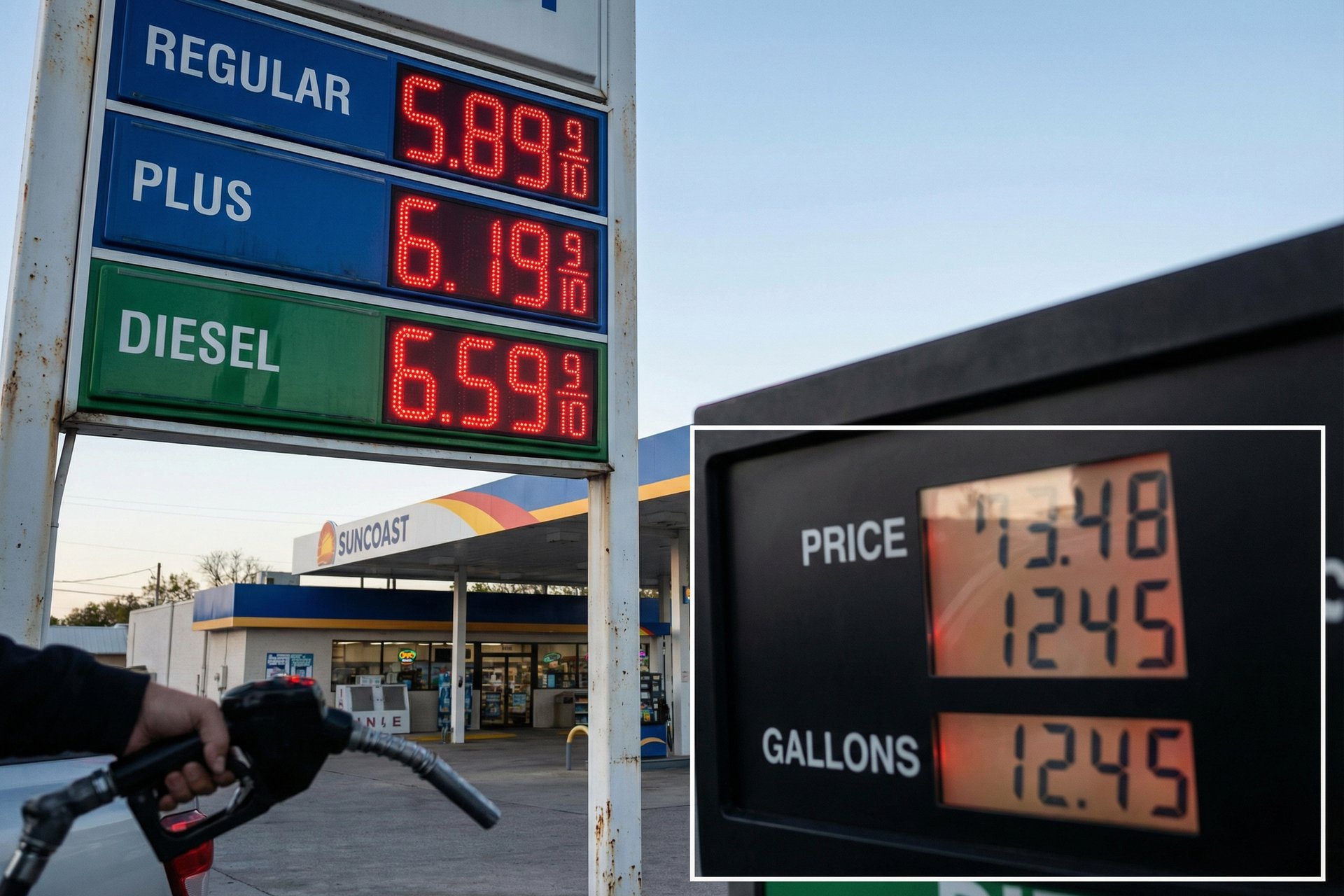
As gas prices continue to climb since the launch of the war in Iran, President Trump and some U.S. lawmakers have floated the idea of suspending the 18-cent federal gas tax to help drivers suffering from high prices at the pump.
Additionally, several states are considering gas tax holidays and one – Georgia – has already implemented one.
“I mean, we’ve thought about it, I guess,” Trump said when he was asked if he is considering the idea of suspending the gas tax that has been collected by the federal government since the 1930s in light of the current high gas prices.
“But the gas tax — you know, people have talked about it,” Trump continued. “It’s something we have in our pocket if we think it’s necessary.”
A pair of Democratic lawmakers in the U.S. Senate also introduced legislation on March 13 that called for the suspension of the federal gas tax until October 1 in light of the nation’s escalating gas prices.
“This legislation temporarily suspends the federal gas tax, lowering high gas prices squeezing consumers and bringing much needed financial relief to American families,” said Sen. Richard Blumenthal, a Democrat from Connecticut who co-authored the bill.
The comments from the president and lawmakers came as the average price of gas reached $3.99 on March 30, according to the AAA Auto Club. That’s up from a national average gas price of $2.98 on Feb. 28
How Much Gas Taxes Does the Federal Government Collect?
The federal government has been collecting taxes on every gas purchase made at a U.S. station since the 1930’s. The current rate of 18.4 cents-per-gallon was established by a law that was passed by Congress in 1993. Transportation funding advocates have lamented the fact that Congress has not moved to increase the gas tax in over three decades.
The gas tax is typically authorized by Congress each time it adopts a federal highway funding bill because the revenue it generates is used to fund the U.S. Department of Transportation’s Highway Trust Fund, which is distributed to states to help pay for road and transit construction projects.
The federal gas tax was first established in 1932 at a rate of 1 cent per gallon. It has been increased multiple times since then by Congress, and some lawmakers have called to tie it to inflation as votes to increase taxes have become politically difficult for lawmakers to stomach before going before voters.
A suspension of the federal gas tax would require an act of Congress since the collection of the levy was authorized by lawmakers in previous highway funding bills.
Which States Have Suspended Their Gas Tax or Are Considering It?
Georgia became the first state to temporarily suspend its gas tax. The state’s drivers were paying an average of $3.58 per gallon for gas on March 30, which was up from an average of $2.79 per gallon one month ago, according to the AAA Auto Club.
Georgia was charging drivers 33 cents per gallon in gas taxes before their suspension, according to the Tax Foundation. That was on top of the 18.4 cents per gallon that goes to federal coffers.
The following states are considering lowering their local gas tax rates and these are their current gas price averages and tax amounts:
Utah
- March 30 average fuel price: $4.20
- Current gas tax amount: 39 cents per gallon
Florida
- March 30 average fuel price: $3.95
- Current gas tax amount: 39 cents per gallon
Connecticut
- March 30 average fuel price: $3.94
- Current gas tax amount: 25 cents per gallon
Pennsylvania
- March 30 average fuel price: $3.94
- Current gas tax amount: 59 cents per gallon
USA TODAY National News Reporter Eduardo Cuevas and Senior National Political Correspondent Sarah D. Wire contributed to this report.
This article originally appeared on USA TODAY: What would a federal gas tax suspension mean for car owners?
Reporting by Keith Laing, USA TODAY / USA TODAY
USA TODAY Network via Reuters Connect
